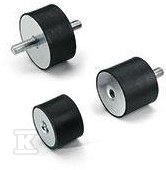
Vibration isolator DVA.2-100-40-M16-41-70 Z050534

Catalog numbers:
- DVA.2-100-40-M16-41-70
Suggested products
TECHNICAL DATA
Sales unit dimensions and weight: 1 pcs
Vibration isolator DVA.2-100-40-M16-41-70 Z050534
Vibration Isolators – Reduction of Vibrations and Noise in Machines and Equipment
Vibration isolators from the DVA.2 series are elements designed to dampen vibrations and reduce noise generated by machines and equipment. Their use translates to improved work comfort, increased safety, and extended equipment life. The construction based on a combination of galvanized steel and natural rubber provides effective isolation from vibrations. They are particularly useful for mounting components such as motors, fans, or pumps.
Construction and Application
The DVA.2-100-40-M16-41-70 vibration isolator is characterized by a cylindrical construction, with a threaded pin and a bushing with a threaded (non-through) hole. Made of high-quality galvanized steel, they ensure durability and corrosion resistance. The rubber damping body, with a hardness of 70 on the Shore A scale, effectively absorbs vibrations. The M16 thread allows for easy mounting in various industrial applications.
These elements find application wherever it is necessary to limit the transmission of vibrations – from production machines, through laboratory equipment, to electrical cabinets. Thanks to them, it is possible to minimize the negative impact of vibrations on the environment and the equipment itself.
Key Features and Benefits
- Effective vibration isolation: the combination of steel and rubber provides a high level of vibration damping, reducing noise and improving work comfort.
- Durable construction: galvanized steel guarantees corrosion resistance and long life even in harsh industrial conditions.
- Easy installation: the M16 thread facilitates integration with various machine and equipment structures.
- Versatile application: ideal for mounting motors, pumps, fans, and isolating electrical cabinets and other vibration-sensitive elements.
- Availability of different rubber hardnesses: the ability to choose the appropriate hardness (40, 55 or 70 Shore A) allows you to adapt the vibration isolator to specific application requirements.
- Reduced wear of components: vibration damping translates to lower mechanical loads on components, which extends their life.
- Improved safety: reducing vibrations minimizes the risk of mechanical damage and equipment failure.