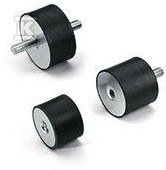
Vibration isolator DVA.3-20-20-M6-55 Z030940

Catalog numbers:
- DVA.3-20-20-M6-55
Suggested products
TECHNICAL DATA
Sales unit dimensions and weight: 1 pcs
Vibration isolator DVA.3-20-20-M6-55 Z030940
Vibration Isolators – Reduction of vibrations and noise in machines and equipment
The DVA.3-20-20-M6-55 vibration isolator is an element dedicated to damping vibrations and reducing noise generated by operating machines and equipment. Its use translates to improved work comfort, increased safety, and extended equipment life. This is particularly important in industrial environments, but also in applications where precision is key.
Design and application
This model of vibration isolator is characterized by a cylindrical design and has internal M6 threads on both sides, which facilitates mounting between elements. Steel, galvanized inserts ensure durability and corrosion resistance. This vibration isolator is primarily used for mounting components such as motors, fans or pumps. Thanks to its design, it allows for a flexible connection of elements, absorbing vibration energy and minimizing its transfer to the surroundings.
Key features and benefits
- Effective vibration reduction: 55 Shore’a hardness rubber effectively dampens vibrations, minimizing noise and protecting sensitive components from damage.
- Durable construction: Galvanized steel provides corrosion resistance and long-term reliability even in harsh operating conditions.
- Easy installation: Internal M6 threads allow for quick and secure mounting without the need for additional fastening elements.
- Versatility: Suitable for a wide range of applications – from industrial machines to precision equipment.
- Improved work comfort: Noise reduction translates to better working conditions for machine operators.
- Extended equipment life: Vibration damping reduces mechanical loads on structural elements, which affects their durability.
By choosing vibration isolators from Elesa+Ganter, you are investing in a proven solution that contributes to improving the efficiency and reliability of your machines and equipment. Remember to select the appropriate rubber hardness (55 Shore’a in this case) to the specifics of the application – rubber that is too soft may not provide sufficient damping, and rubber that is too hard may not absorb low-frequency vibrations.