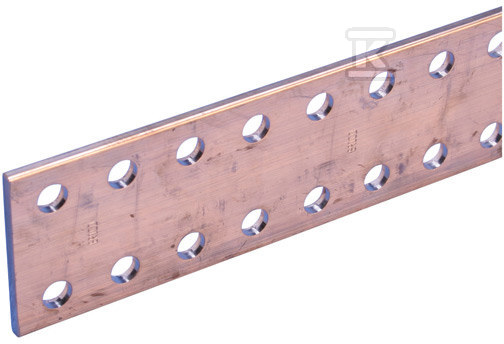
Slotted trunking 1750 mm DPCB 100x10 550380
from 2 pcs3 712,73 zł
gross / pcs
to order
Suggested products
TECHNICAL DATA
Sales unit dimensions and weight: 1 pcs
length/width/height/weight/volume:1,75 m / 0,1 m / 0,01 m / 14,5 kg / 0,002 m3
Customs code:85369010
Slotted trunking 1750 mm DPCB 100x10 550380
Perforated rail for installation support systems
The perforated rail, 1750 mm long and made of copper, is a key element in support systems for electrical and mechanical installations. Its perforation in two rows allows for flexible mounting of various elements – from cables and pipes to light supporting structures. This is an ideal solution for both professional installers and end-users who value order and ease of installation modification.
Construction and application
The rail made of copper is characterized by good electrical conductivity and corrosion resistance. Perforation in two rows provides a large degree of freedom in the placement of fixing elements, which translates into ease of adaptation to specific mounting conditions. These types of rails are widely used in:
- electrical installations in commercial and industrial buildings,
- HVAC (heating, ventilation, and air conditioning) installation support systems,
- supporting structures for light machinery and equipment.
- photovoltaic installations - as an element for mounting wires and supporting structures for panels.
Advantages and benefits
- Installation flexibility: Two rows of holes allow for precise adaptation to the needs of a specific installation. Various types of brackets and fasteners can be used.
- Durability: Copper is a corrosion-resistant material, guaranteeing long-term use of the rail even in harsh environmental conditions.
- Electrical conductivity: The copper construction can serve as grounding or an equalization conductor, simplifying the installation design.
- Ease of modification: If necessary, you can easily add or change the position of elements attached to the rail without having to disassemble the entire structure. This saves time and costs during any renovations or repairs.
- Versatility: The rail will work in many different applications – from simple electrical installations to more complex industrial construction support systems.
SIMILAR PRODUCTS / OTHER SIZES
from 2 pcs3 712,73 zł
gross / pcs
to order