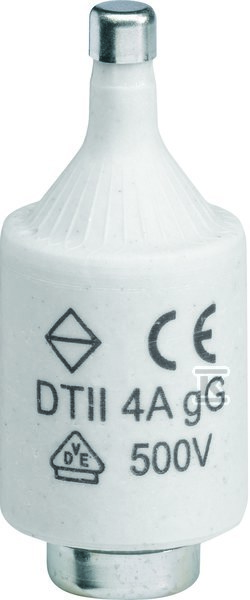
Fuse link DTII/E27, time-delay gG (Bi-Wtz) 4A 500VAC LE2704

Suggested products
TECHNICAL DATA
Sales unit dimensions and weight: 1 pcs
Fuse link DTII/E27, time-delay gG (Bi-Wtz) 4A 500VAC LE2704
Safety and electrical installation protection
DTII/E27 fuse insert is an element providing effective protection of electrical circuits against overload and short circuit. Made in time-delay gG (Bi-Wtz) characteristic, it is perfectly suited for protecting devices and installations where short-term current surges are permissible – for example, when starting motors. Thanks to this, it does not cause unnecessary disconnection of the circuit during temporary overloads, and at the same time reliably reacts in the event of more serious failures.
Construction and application
DII-sized fuse insert, designed to operate at a rated voltage of 500V and a current of 4A. Its brown color makes it easy to identify in the installation. It is a universal element that will find application both in home and industrial installations. The use of the time-delay gG characteristic makes it particularly recommended for protecting circuits supplying receivers with high starting currents.
Key features and benefits
- Time-delay characteristic (gG): Allows short-term exceeding of the rated current without disconnecting the circuit – ideal for devices with motors or other loads generating high starting currents.
- Rated voltage 500V: Provides a wide range of applications in various electrical installations.
- Rated current 4A: Suitable for protecting circuits with lower power consumption.
- Size DII: Standard fuse insert size, compatible with most fuse holders available on the market.
- High-quality workmanship: Guarantees reliable operation and long life.
- Easy identification: Brown color makes it easy to recognize the fuse insert in the installation.
- Compliance mark: The product meets appropriate safety standards, confirming its quality and reliability.
Installation and replacement
Replacing the fuse insert is simple and intuitive. Remember to disconnect the power supply before starting work and use appropriate insulating tools. In case of frequent blowing of the insert, diagnose the cause of the problem and take appropriate repair measures – this may indicate an overload of the circuit or damage to the connected devices.