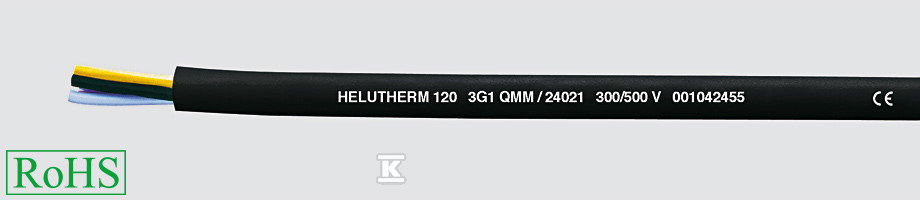
PVC cable resistant to high temperatures HELUTHERM® 120 18G0,75 mm² black, conductor identification according to DIN VDE 0293-308 24017

Suggested products
TECHNICAL DATA
Sales unit dimensions and weight: 1 m
PVC cable resistant to high temperatures HELUTHERM® 120 18G0,75 mm² black, conductor identification according to DIN VDE 0293-308 24017
High-temperature resistant PVC cable – reliability in demanding conditions
This black, 18-core HELUTHERM® 120 cable with a cross-section of 0.75 mm² is an ideal solution for applications where standard cables fail. Designed to operate at elevated temperatures, it is perfect for machines, equipment and motors generating heat – in paint shops, dryers and other industrial facilities. The cable meets stringent DIN VDE 0285-525-2-11 / DIN EN 50525-2-11 standards, guaranteeing safety and reliability.
Construction and properties for professionals
The cable is characterized by a solid construction. Copper, stranded wires (class 5 according to DIN VDE 0295) provide flexibility and resistance to repeated bending. PVC insulation (TI3) and an external jacket made of high-temperature resistant PVC (TM3) protect against mechanical damage and external factors. Wire identification is done using colors (according to DIN VDE 0293-308), which facilitates assembly and servicing. Thanks to this, installers can count on quick and trouble-free installation.
The cable is designed to operate in temperatures from -30°C to +105°C (stationary) and from -5°C to +105°C during installation, and can withstand up to +120°C for a short time. The rated voltage U is 500 V. The minimum bending radius is 4x cable diameter for stationary installation and 7.5x cable diameter for flexible operation. The cable is also resistant to radiation up to 80 x 10⁶ cJ/kg (80 Mrad).
Applications and benefits for the end user
This cable is not only durable – it is also versatile. It will work both in internal installations (dry, damp and wet rooms) and external ones. Ideal for connections in production machines, heating devices or control systems where high temperature is unavoidable. Thanks to its radiation resistance, it can also be used in environments exposed to it. The materials used in production are cadmium-free, silicone-free and do not contain substances that interfere with painting – which translates into safe use and no impact on technological processes.