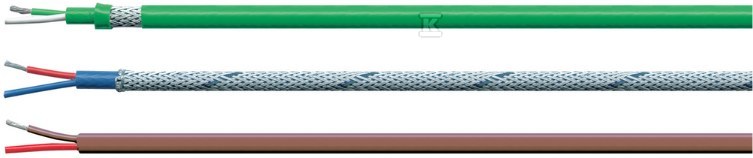
Thermocouple cable type J jxyclycek 2x1.5 in heat-resistant PVC, shielded CuSn 18050487

Suggested products
TECHNICAL DATA
Sales unit dimensions and weight: 1 m
Thermocouple cable type J jxyclycek 2x1.5 in heat-resistant PVC, shielded CuSn 18050487
Thermocouple cable for temperature measurement
This shielded thermocouple cable, type J, designated as JXYcLYcek 2x1.5, is a reliable solution for precise temperature measurement in demanding industrial conditions. The cable is made of high-quality materials, ensuring its durability and resistance to external factors. The construction with a CuSn screen minimizes electromagnetic interference, guaranteeing the accuracy of readings.
Construction and properties
The cable consists of two conductors made of Fe-CuNi alloy, insulated with heat-resistant PVC. A braid of tinned copper wires provides additional mechanical protection and flexibility. The outer jacket is also made of PVC resistant to high temperatures. This construction allows operation in a wide temperature range – from -25°C to +105°C for continuous operation in PVC, and even up to +750°C for type J thermocouples (according to IEC 584-3). It is worth noting that thermocouple cables (X) are often called extension cables, as they are made of the same materials as the thermocouples themselves.
Applications and benefits
This cable is ideal for applications requiring precise temperature measurement in harsh conditions, such as:
- Metallurgical industry
- Foundries
- Chemical plants
- Furnaces and heating systems
- Technological processes requiring temperature monitoring
Thanks to the shielding, the cable minimizes the risk of signal interference, which translates to greater reading accuracy. The possibility of ordering control cables (1-25 conductors with a cross-section of 0.5 – 2.5 mm²) increases functionality and allows integration with control systems. Additionally, it is possible to manufacture cables with a special construction, tailored to individual customer needs. This cable allows for the safe extension of the thermocouple to the signal receiver in places with safe conditions for people and measuring devices.