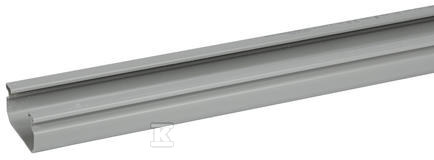
Non-perforated cable tray PCW 100 x 50 637710

Suggested products
TECHNICAL DATA
Sales unit dimensions and weight: 1 m
Non-perforated cable tray PCW 100 x 50 637710
Universal Cable Tray PCW – Robust Protection and Orderly Installation
This cable tray, made of polyvinyl chloride (PVC), is a practical solution for both professionals and end users. It is designed for the aesthetic and safe routing of electrical, telecommunications, and other cables. Its non-perforated construction provides additional protection against mechanical damage and external environmental factors.
The tray with dimensions 100 x 50 mm is ideal for applications in building, industrial, and commercial installations. Manufactured from durable PVC with a wall thickness of 2.3 mm, it ensures long-term reliability and corrosion resistance. The 100 mm width allows for easy accommodation of multiple cables of varying diameters, while the 50 mm height provides sufficient working space.
Advantages and Practical Benefits:
- Durable Material: Polyvinyl chloride (PVC) is resistant to moisture, chemicals, and mechanical damage, ensuring a long service life.
- Safety: The non-perforated design protects cables from accidental damage during installation or operation.
- Easy Installation: The tray is simple to install and can be easily customized to meet individual requirements.
- Aesthetic Appearance: The gray color (RAL 7030) blends seamlessly with most interiors, providing a clean and professional look.
- Wide Application: Ideal for routing electrical, telecommunications, network, and other types of cables.
- Temperature Resistance: Reliable operation in temperature ranges from -5°C to 60°C makes it suitable for diverse environmental conditions.
- Large Working Space: A usable cross-sectional area of 4055 mm² allows for the comfortable arrangement of even a large number of cables.
The cable tray complies with the requirements of standard PN-EN 61537, confirming its high quality and safety. The 3-meter length facilitates precise adaptation to specific installation needs, minimizing waste and joints. The absence of mounting perforations on the bottom increases structural stability and simplifies mounting to surfaces.