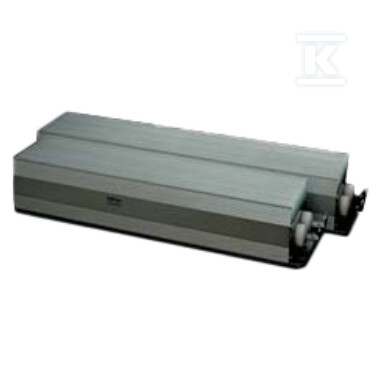
Resistors, dedicated for use with MCRF 300W frequency inverters 300 OHM MCRF 300W 300 OHM
Suggested products
TECHNICAL DATA
Sales unit dimensions and weight: 1 pcs
Resistors, dedicated for use with MCRF 300W frequency inverters 300 OHM MCRF 300W 300 OHM
Braking resistors – the key to effective motor control
Braking resistors, such as the MCRF 300W 300 OHM model, play a crucial role in motor control systems using frequency inverters. Their task is to safely dissipate the energy generated during motor braking, converting it into heat. Without a braking resistor, excess energy could damage the inverter or disrupt its operation. Therefore, the resistor ensures reliable system operation and extends the lifespan of its components.
How does a braking resistor work?
During motor braking, kinetic energy is converted into electrical energy. In the absence of a load or excessively rapid braking, this energy accumulates on the inverter's DC bus, causing the voltage to rise. The braking resistor effectively dissipates this excess energy, preventing the voltage from exceeding permissible values and protecting the inverter from damage. The MCRF 300W 300 OHM model is dedicated to working with LS Electric inverters and has been designed to efficiently dissipate energy in circuits up to 1.5kW.
Characteristics and application
This 300W and 300 Ohm resistor is particularly useful in applications requiring frequent and dynamic motor braking. It is an ideal solution for machines and devices where precise speed and stopping control is crucial. Using the MCRF 300W 300 OHM resistor allows for optimization of the braking process, ensuring smooth and controlled reduction of the motor's rotational speed. Additionally, these resistors are characterized by compact dimensions and a safe construction, which facilitates their installation and use. It is important to select the appropriate resistor power depending on the load characteristics and inverter parameters – this model is designed for loads up to 150% braking torque with a duty cycle ED=5%.