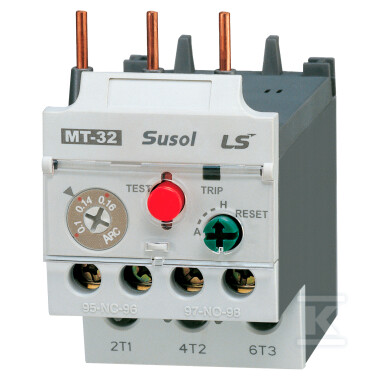
Thermal overload relay for MC9b-40a series contactor, current 1.6-2.5A MT-32 1.6-2.5A MT-32 1,6-2,5A
Suggested products
TECHNICAL DATA
Sales unit dimensions and weight: 1 pcs
Thermal overload relay for MC9b-40a series contactor, current 1.6-2.5A MT-32 1.6-2.5A MT-32 1,6-2,5A
Thermal overload relay for contactor – protection and reliability of the installation
The MT-32 thermal overload relay, designed to work with MC9b-40a series MT contactors, is a key element in protecting the electrical installation. Its task is to protect electric motors from overload, which translates to a longer lifespan of devices and minimization of repair costs. This device finds application in a wide spectrum of applications, from simple control circuits to more advanced automation systems.
Characteristics and application
The MT-32 relay is characterized by an adjustable current range of 1.6-2.5A, which allows it to be adapted to various loads. This is particularly important in the case of motors with a variable nature of operation or subject to natural wear, which can cause an increase in current consumption. Mounted directly on the MC9b-40a contactor, it provides a quick and effective response in the event of a malfunction. Thanks to this, it protects not only the motor itself but also other elements of the installation from potential damage caused by overload.
Advantages and benefits of use
Motor protection: Protects electric motors from damage caused by overload or short circuit.
Adjustable current range: Allows precise adjustment to the specific load (1.6-2.5A).
Compatibility: Designed to work with MC9b-40a series MT contactors – easy installation and integration with existing systems.
High reliability: Ensures stable and long-lasting operation in various environmental conditions.
Simple operation: Intuitive design facilitates configuration and diagnostics.
Minimization of downtime: Fast response to overloads reduces the risk of failures and downtime in production.
Increased safety: Protects personnel from electric shock in the event of motor insulation failure.
For installers, this means easy installation and confidence in the proper operation of the protection system. For end-users – peace of mind and minimization of the risk of costly failures and downtime in device operation.