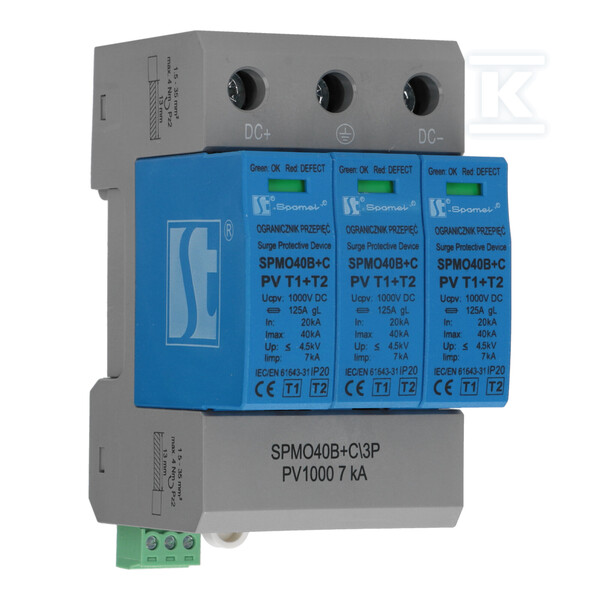
Varistor surge protector for photovoltaic installations 3P, 1000V DC SPMO40B+C\3P-PV1000-7kA SPMO40B+C\3P-PV1000-7KA

Suggested products
TECHNICAL DATA
Sales unit dimensions and weight: 1 pcs
Varistor surge protector for photovoltaic installations 3P, 1000V DC SPMO40B+C\3P-PV1000-7kA SPMO40B+C\3P-PV1000-7KA
Comprehensive protection for photovoltaic installations
This three-phase surge protector (SPMO40B+C\3P-PV1000-7kA) is designed to provide the highest level of safety in photovoltaic installations. It combines the functions of Type T1 and T2 surge protectors (class B+C), which means it effectively protects against the effects of both direct lightning strikes and induced and switching surges. This solution is particularly important in PV systems, where the risk of damage caused by surges is increased.
Versatility and efficiency
This surge protector works in both new installations and during the modernization of existing photovoltaic systems. Its versatility will be appreciated by designers and installers looking for reliable protection for their projects. Using a T1+T2 class B+C surge protector guarantees comprehensive protection, minimizing the risk of failures and downtime. This allows investors to count on the long-term and efficient operation of their PV installation.
Construction and operating parameters
The device is characterized by high efficiency thanks to the use of varistors. The maximum continuous DC voltage is 1000V, the rated discharge current (8/20μs) is 20kA, the maximum discharge current (8/20μs) reaches as much as 40kA, and the rated impulse current (10/350μs) is 7kA. The response time (t A) is a maximum of 25 ns, and the operating temperature range is from -40°C to +80°C. The housing made of PA6 material (according to UL94-V0 standard) ensures durability and resistance to external factors. The status indicator of the insert (green – OK, red – damaged) facilitates quick diagnostics and allows for efficient replacement in the event of a failure. Mounting is done on a TH35 rail, which simplifies the installation process.
Important: Installation, connection and commissioning of the device should be carried out exclusively by qualified electrical personnel with appropriate permissions and training in electrical safety. Observe the applicable regulations regarding the installation of electrical equipment and technical standards for the operation of electrical equipment.