XLPE aluminum cables
(22 )
(6)
Buy before 14:00
shipping today

Cost after selecting the section
(3)
Buy before 18:00
shipping today
Cost after selecting the section
(5)
Buy before 18:00
shipping today
Cost after selecting the section
(7)
Buy before 18:00
shipping today
Cost after selecting the section
(7)
Buy before 18:00
shipping today
Cost after selecting the section
(2)
Buy before 18:00
shipping today
Cost after selecting the section
Buy before 18:00
shipping today
Cost after selecting the section
(2)
Buy before 18:00
shipping today
Cost after selecting the section
(4)
Buy before 14:00
shipping today
Cost after selecting the section
(5)
Buy before 18:00
shipping today
Cost after selecting the section
(2)
Buy before 18:00
shipping today
Cost after selecting the section
(3)
Buy before 18:00
shipping today
Cost after selecting the section
(1)
Buy before 18:00
shipping today
Cost after selecting the section
(1)
Buy before 18:00
shipping today
Cost after selecting the section
Buy before 18:00
shipping today
Cost after selecting the section

(1)
Buy before 18:00
shipping today
Cost after selecting the section
Buy before 18:00
shipping today
Cost after selecting the section
Buy before 18:00
shipping today
Cost after selecting the section
Buy before 18:00
shipping today
Cost after selecting the section

(1)
Buy before 18:00
shipping today
Cost after selecting the section
(3)
(1)
Buy before 18:00
shipping today
Cost after selecting the section
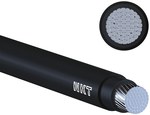
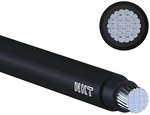
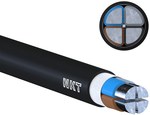
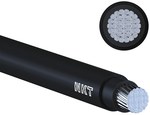
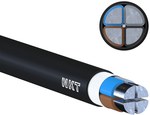
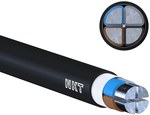
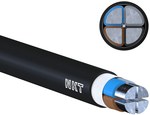
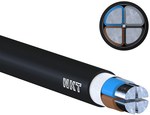
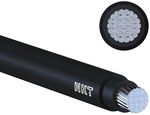
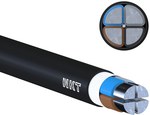
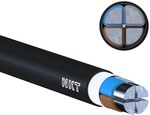
XLPE aluminum cables are aluminum cables covered with cross-linked polyethylene insulation (XLPE), which has better properties than regular PVC insulation. The products available in our offer are YAKXS underground power cables up to 1 kV.
View available variants and select the cross-section and core type that will meet the needs of your installation.
Properties of aluminum cables and wires
Aluminum wires are characterized by lower electrical conductivity than copper wires, which is why they are rarely used in home installations with a large number of receivers. However, they are much lighter and much cheaper than their copper counterparts.
Due to its lower cost, the aluminum ground cable is used to transmit energy over long distances. It is usually used as a power cable in industrial plants and power plants, and in the connections of home installations to the power grid.
Advantages of XLPE insulation
XLPE insulation made of cross-linked polyethylene differs in its construction from the most common PVC insulation, made of polyvinyl chloride. Cross-linking between polymers strengthens the coating, thus providing it with better strength and thermoplastic properties. The most important advantages of XLPE insulation include:
- low dielectric loss factor;
- ability to work at high temperatures;
- resistance to mechanical damage;
- high flexibility;
- greater resistance to loads and short circuits;
- resistance to moisture and weather conditions.
Unfortunately, XLPE insulation deteriorates when exposed to sunlight, which is why it is mainly used in underground cables and in non-sunlit locations.
Which YAKXS 0.6/1 kV aluminum cable should I choose?
The choice of the right cable depends on many factors that affect the durability and operation of the entire installation. These include, among others, the value of the current that is to flow through the cable, the connected receivers, the distance over which the energy will be transmitted and external conditions (temperature and humidity).
What to look for when choosing a YAKXS power cable up to 1 kV?
Cross-section
The cross-section of the wire affects the maximum current value and electrical resistance. The larger the cross-section of the wire, the greater the load it can transfer and the lower the resistance.
It is worth remembering that with very long cables between the supply point and the reception point, a voltage drop may occur. It should not be more than 6%, so it is necessary to ensure a suitably large cross-section of the cable to minimize losses.
So if you want to power power-hungry receivers or you need to send high-intensity current over a considerable distance, it is worth choosing cables with a larger cross-section. However, such aluminum cables are less susceptible to bending, which can be a problem when laying them in hard-to-reach places. The bend radius should not be less than 15 times the outer diameter of the cable. Otherwise, you can damage the cores or insulation.
Our offer includes aluminum cables with a cross-section from 16 to 240 mm, which allows you to adapt them to your installation.
Number and types of veins
The number of cores in the cable determines whether you will connect a single-phase or three-phase receiver to it.
In our shop you will find 1-, 4-core and 5-core cables. 5-core cables have a protective conductor (ŻO) protecting against electric shock during a breakdown on the receiver.
Flexibility class of veins
In addition to the number of cores in the cable, you can also choose their flexibility. Our range includes aluminum ground cables of flexibility class I (single-wire) and class II (multi-wire). Both classes are intended for permanent installation. The higher the class, the more susceptible the cable is to bending.
Vein cross-section shapes
There are several cross-sectional shapes of veins. They are designated as veins:
- SE – sector single-wire;
- SM – sector multi-wire;
- RE – round single wire;
- RM – round multi-wire;
- RMC – compacted multi-wire.
Stranded conductors are more flexible than their single-strand counterparts, making them easier to form.
Cables with sector and dense cores have a smaller core diameter, which saves space when using large cross-sections and reduces the amount of material needed for the sheath.
Choose efficient power transmission with XLPE aluminum cables available in our assortment. See also XLPE copper cables and enjoy their functionality and durability for years.