Duct heaters
(11 )
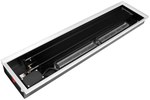
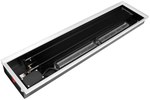
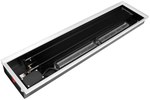
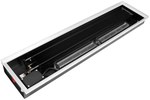
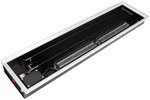

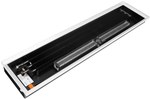
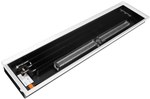
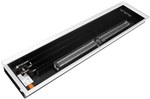
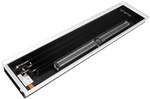
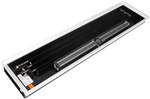
Channel heating is most often chosen for modern construction. It allows you to heat a room without having to allocate space for hanging radiators. How is this possible? A channel radiator is mounted in a floor channel and covered with an elegant grid. Thanks to this, the room is warm, and the interior design is not disturbed by wall-mounted radiators. What types of channel radiators are currently available? How do they differ? We advise you!
Channel radiators – types
A duct heater is a type of heater installed in a duct placed in the floor (right next to a window or patio door reaching the floor). It distributes the heat produced by the phenomenon of convection. The warm air from the heater is pushed into the room by the cold air from the window.
Channel radiators differ in shape from wall-mounted radiators. They are much lower and longer, as they take the form of long, flat cuboids. Individual models may or may not include fans. Read below for the situations in which these two specific types of channel radiators are useful.
Channel radiators without fan
Fanless duct heaters allow for heating rooms using only convection. Warm air rises upwards and is “pushed” into the room by colder air near the glass. A fanless duct heater is often chosen for a mixed system. In this case, underfloor heating is combined with duct heating.
Fan-assisted duct heaters
Channel heaters with a fan are models equipped with their own fan. Thanks to it, the efficiency of the heater is higher. Why? Warm air is distributed by the fan and this process is only supported by the natural phenomenon of convection. Channel heating of this type is characterized by high power and a more elegant design of the heater than in the case of models without a fan. A channel heater with a fan is shallower or lower, so there is no need to prepare a deep channel.
Channel radiator - grilles and accessories
A duct heater, regardless of whether it is a model with a fan or without, is always covered with a grid. These grids differ in width, slat spacing, material from which they are made, as well as color or style. Many duct heating manufacturers also offer accessories for duct heaters. Check which elements from these categories will be useful in your home:
Grilles for duct heaters – can be made of aluminum, which is characterized by the best heat conduction. Other materials from which they are made include stainless steel and natural wood. They are used to mask the duct heater, as well as to protect the channel, i.e. the hole in the floor. When buying a cover or grille for a floor heater, pay attention to the quality of workmanship and the way the product is finished. The grille should be resistant to heavy weight pressure, as well as contact with moisture (e.g. when washing the floor). Linear or rolled models are available.
Accessories for duct heaters include, among others, elements for systems controlling the heat produced by the heater. This category also includes valves, actuators, thermostats, power supplies necessary for installing the heater. Remember to choose them taking into account not only the price. The quality of their workmanship and durability are important, because thanks to them you can be sure of the trouble-free operation of the underfloor heating system for a long time.
Is duct heating effective?
Heating a room with a duct heater can be effective and efficient. However, it is important to choose the right size, and therefore the power of such a heater, for the size of the room. It is important for achieving thermal comfort that the duct heater is installed in an optimal place. It should be located under a window reaching the floor or a patio door. When these aspects are taken care of, you can count on even distribution of heat in the room.