A motion sensor is an electronic device that is widely used in everyday life. It is most often installed in various types of installations, such as alarm systems or lighting. What is the principle of operation of a motion sensor, how to properly calibrate the device and what motion sensors are available? You will learn from this article!
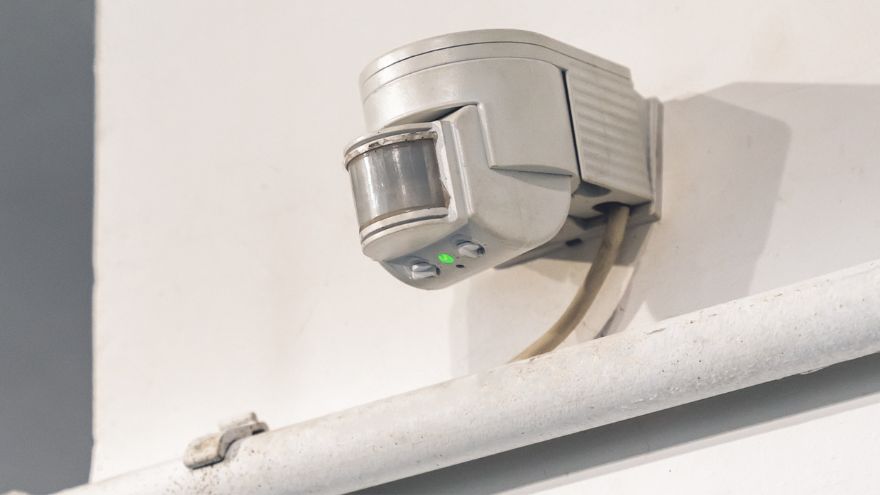
Check out the motion sensors at the Onninen wholesaler
How do motion sensors work?
The mechanism of action in motion sensors depends primarily on the device variant and its construction and technology used. Currently, the most commonly used solutions are those based on infrared , ultrasound or microwaves. Depending on the medium used, there are active sensors, also called radar sensors, in which electromagnetic waves are used, while in the second variant of active devices , ultrasound is responsible for sending and receiving. In turn, in passive motion sensors, the devices operate using infrared .
 In active sensors, the basis of operation is signals - sent and received by the appropriate elements of the system. Depending on the variant, these are ultrasound (mechanical factors) or electromagnetic waves, which can be transmitted both in the microwave range and visible light. The beams are sent, and when they encounter an "obstacle" they reflect from it, returning to the transmitting-receiving device. Detecting movement, they activate the installation in which they are installed (switch on the alarm or lighting). The physical phenomenon of the Doppler effect is therefore used on a wide scale, not only in medicine. In various types of systems, changes in the wave frequency are detected. When the sending and receiving beams have the same length, i.e. it reflects from walls, furniture, etc., because the mutual position of objects and the device has not changed. If an additional object appears on the path of the sent wave, the wave frequency changes, and the sensor receives information about the detection of movement.
How to properly calibrate the motion sensor?
Proper calibration of sensors is essential for the correct operation of the entire system. To enjoy full functionality, the whole must be properly arranged and the sensor must be properly mounted . All the elements included in the set will be needed for connection and calibration. Depending on the model , it may be necessary to use an appropriate control system, power supply . The selection of cables and their installation should be performed by professionals to avoid failures.
 Calibration is performed in accordance with the guidelines provided by the manufacturer of the selected sensor variant and the technology in which it operates. In most solutions, the operating range can be controlled and set accordingly, according to individual needs. It is enough to program the appropriate sensor to adapt the solution to the needs. Calibration includes in particular:
- the SENS parameter, the value of which is expressed numerically, refers to the definition of the sensitivity and range of the motion sensor,
- LUX parameter - refers to the twilight sensor setting, it is expressed in lumens per square meter,
- TIME parameter, indicating the switching time of the device connected to the sensor , this value is expressed in seconds or minutes.
The sensor can be assigned specific values so that it works as expected. Adjusting a system with motion and twilight sensors is usually not complicated, because currently used solutions are equipped with special knobs, the position of which allows for correction of operation.
How does a microwave motion sensor detect movement?
In microwave sensors, electromagnetic waves are sent in a narrow band, which makes the devices exceptionally sensitive and highly precise. Among the greatest advantages of this variant is the fact that they are insensitive even to large temperature changes, they work efficiently and without failure.
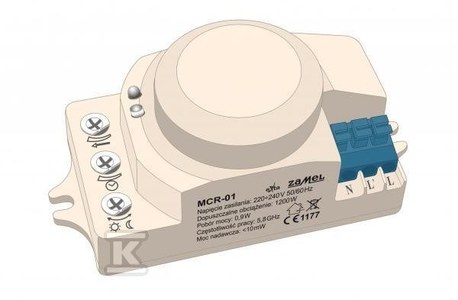 The emitted and received microwaves enable detection of the movement of objects, including those that move in parallel - approaching or moving away from the sensor. Additionally, microwaves can overcome small objects, including thin walls , glass - they pass through them. Most devices based on microwaves can be adjusted, defining the range of operation. The sensitivity of the device means that it detects any movement, even when it is generated by, for example, a cleaning robot.
Before deciding to purchase a microwave motion sensor, remember that electronic devices (especially if they also emit microwaves) or large metal surfaces within the sensor's operating range may interfere with its stable and efficient operation.
Check out the microwave motion sensors at the Onninen wholesaler
When is it best to use a microwave motion sensor?
Microwave devices are characterized by high accuracy of operation. Therefore, a microwave motion sensor will be much more effective in difficult conditions. It will cope perfectly in darkness, in fog, it is insensitive to temperature changes, wind, etc. It allows to detect potential movement from a greater distance. It is also said to be highly effective because it allows to detect the movement of very different objects - characterized by different sizes and shapes.
These models will work perfectly, for example, in warehouses or outside buildings. It is recommended as a motion sensor for an alarm , due to its high sensitivity. The motion sensor alarm using microwave beams provides great safety .
What is a PIR motion sensor?
The PIR motion sensor is one of the currently very popular passive devices. The PIR abbreviation comes from the English Passive Infra-Red. Its essence is the operation in the infrared band, so it allows to detect heat , emitted by the human body, for example. The mechanism of operation allows for the detection of changes in temperature in the room in which the device is operating with great accuracy. These technologically advanced solutions can easily distinguish objects emitting heat from a person or animal, and some of the currently available models also distinguish a person from a pet.
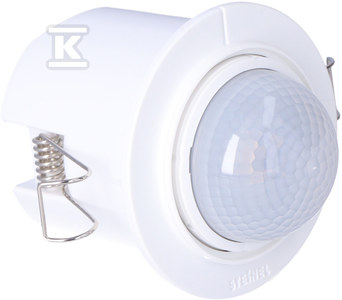 When choosing a PIR sensor, remember that it is a device that does not emit any waves, so its area of influence is limited only to the room in which it is located.
Among the most frequently mentioned advantages of PIR sensors, it is worth mentioning the relatively wide angle of detection. To make the most of the possibilities offered by the device, it should be installed, for example, on a wall or ceiling. This is the best option if it is necessary to detect the movement of an object moving perpendicularly to the sensor .
A major advantage of modern PIR motion detectors is that they are programmed to distinguish between humans and pets. This effect was achieved thanks to technology. The device does detect animals, i.e. objects whose thermal distribution resembles that of humans, but if their mass is significantly smaller, the object is ignored.
Application and advantages of the presence sensor
The presence sensor is also very popular. It is often used in lighting installations, where generated movement causes the light , specific lamps, staircase lighting to be switched on - depending on the design of the entire system. In sensors responsible for lighting control, it is possible to set a time interval in which the lit elements of the system do not go out even if the detector does not detect new movement.
Modern garden with motion sensor lights
Convenient lighting control using motion sensors is used, among others, in gardens or in front of the house. Usually, these devices are equipped with additional functionality - they also have a twilight sensor. The mechanism of operation here is based on the assessment of light intensity. The entire system is then designed in such a way that the intensity is checked first, if its value is lower than the set value, then the motion sensor is activated. This is an excellent solution so that a lamp with a motion sensor located in the garden, on the driveway or in front of the entrance door turns on only after dark.
Motion sensors at the Onninen wholesaler
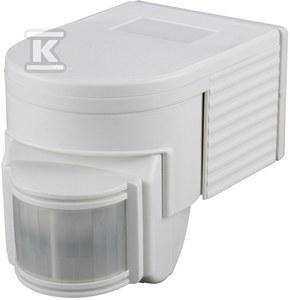
In the offer of the Onninen electrical wholesaler we have a very extensive range of motion sensors and accessories necessary for correct installation. Depending on the application, these are solutions that allow for effective alarm operation or lighting control, enabling the lamp to be switched on under conditions specified in the system.
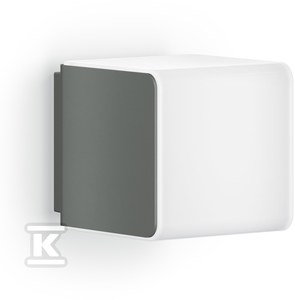
 Certainly, the modern, modern-style facade luminaires from STEINEL are worthy of attention. An example is the Steinel L830 iHF Motion Sensor Lamp . A modern proposal that uses, among other things, a Bluetooth module that makes it easier to control the device. The motion sensor in the presented model is very subtle and inconspicuous, which is why it is appreciated by people who care about the aesthetic appearance of their home. In the discussed model, the detection angle is as much as 160°, and the light can be activated after detecting movement even at a distance of 5 m. A big advantage is that the lamp is turned on only when the motion sensor detects the presence of a person. The device has been programmed to ignore other factors, such as animals, rain or leaves falling in the wind.
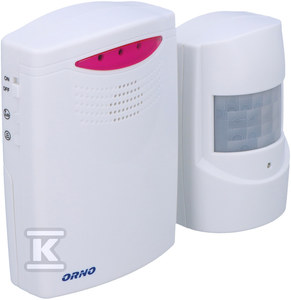
Where it is necessary to take care of the safety of people and property, it is best to invest in motion sensors that are connected to an alarm. They enable effective monitoring of the surroundings , and the distance depends primarily on the device variant. The motion sensor with IP44 wireless signaling provides a range of up to 120 m, making it ideal for monitoring the surroundings of the facility, including the entrance door. It can be used in residential construction, but it will also help to protect warehouses or parking lots. The equipment works wirelessly, but appropriate batteries are necessary, fortunately, the manufacturer has ensured that a notification is sent to the user when the battery charge level is low.