Choosing the right type of gas meter is a key step in ensuring accurate measurement of consumption. A gas meter is a device that monitors the amount of gas being used, allowing for accurate billing and control of energy consumption. There are many different types of gas meters available on the market, and choosing the right one can depend on many factors, such as the type of gas being used, the type of installation, measurement requirements and budget.
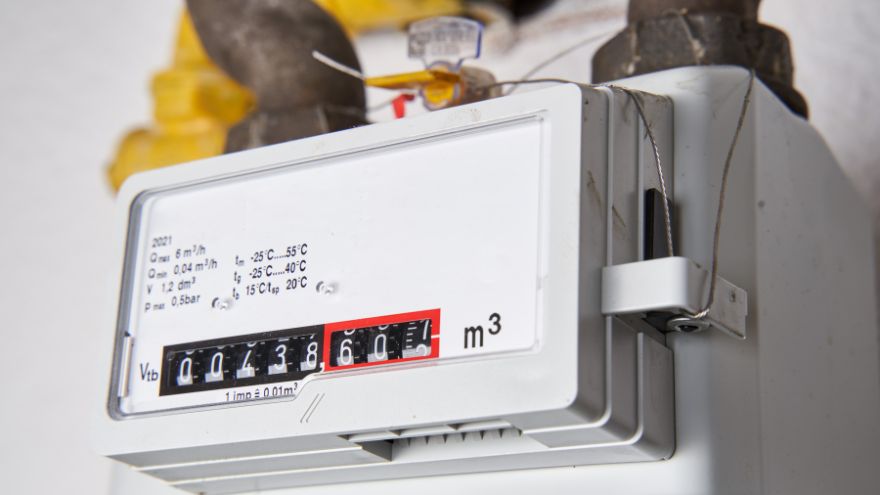
Check gas meters at the Onninen installation wholesaler
What to pay attention to when choosing a gas meter?
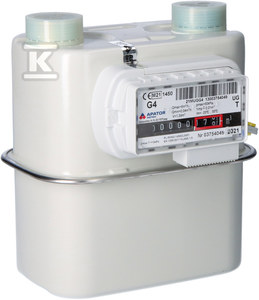
Gas meters are manufactured in various versions, the most popular of which are bellows, rotor and turbine meters. The first ones are the most common – especially in home installations. They operate on the principle of filling two bellows with gas, which sets in motion the connecting rod of the gas flow counting mechanism. They are characterized by a simple design, low price and can be effectively protected against attempts to manipulate readings.
 Rotor and turbine gas meters are types of gas meters used in industrial installations where gas flows are much larger. Rotor models use a rotating rotor to measure gas flow, while turbine gas meters use a rotating turbine. They are also more technologically advanced than bellows gas meters and are used for large-scale measurements.
In addition to the design of the gas meter, its size is also of great importance. Manufacturers provide this value using a special scale, according to which we distinguish the types of gas meters G1.6, G2, G3, G4, G6, etc. The first three types are so small that they are rarely used even in home installations. In such systems, G4 or G6 are most often used. In industrial installations, much larger devices are found - from G10 to G65.
The classification of a model into a specific type is determined by its flow rate, given in fractions of cubic meters per second. The G4 gas meter is designed for a flow rate of 0.040 m3/h, the G6 for 0.060 m3/h, and the G10 for 0.100 m3/h. The characteristic flow rate for larger gas meters is calculated in a similar way.
How to read a gas meter correctly?
Reading a gas meter is usually a simple task. The most important element is the counter, which shows the current gas consumption in cubic meters (m³). When reading a meter, only the digits before the decimal point are important. The digits after the decimal point are not included in the calculations.
The gas meter shows the consumption in cubic meters, but gas is billed in kilowatt-hours. To compare the meter reading with the bill, it is necessary to convert the gas consumption to kWh. This is usually given on the invoice. If necessary, you can also use a conversion factor to determine how many kWh are equal to 1m3 of gas sold. If it is 11.17, for example, it means that 1m3 of gas equals 11.17 kWh of energy supplied.
Gas meters at the Onninen wholesaler
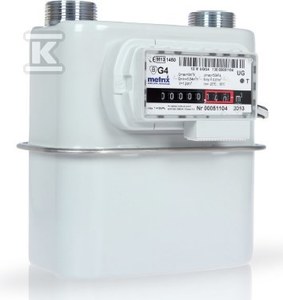 The precision of the gas meter is one of the key factors for the transparency of the customer's settlements with the gas supplier. Therefore, before installing the device, you should make sure that the given model is not only adapted to the specifics of the installation, but also has the required quality. In the Onninen installation wholesaler, we offer gas meters from proven suppliers - e.g. METRIX, as well as KEN or WEBA accessories. These are models such as:
Metrix G4 bellows gas meters with a pulse transmitter are equipped with a precise measuring mechanism and an electronic measuring system, which allows for the precise determination of the amount of gas flowing through them. Due to the accuracy of operation and reliability of measurements, the G4 METRIX gas meter without a pulse transmitter is often chosen by companies conducting gas distribution.
Choosing a gas meter requires considering several aspects. The most important factors are the type of installation (domestic or industrial) and the forecasted demand for gas. Reading the meter yourself will allow for more accurate billing and control of gas consumption.