Power grid surges and lightning strikes can pose a significant threat to photovoltaic installations. How can such installations be secured?
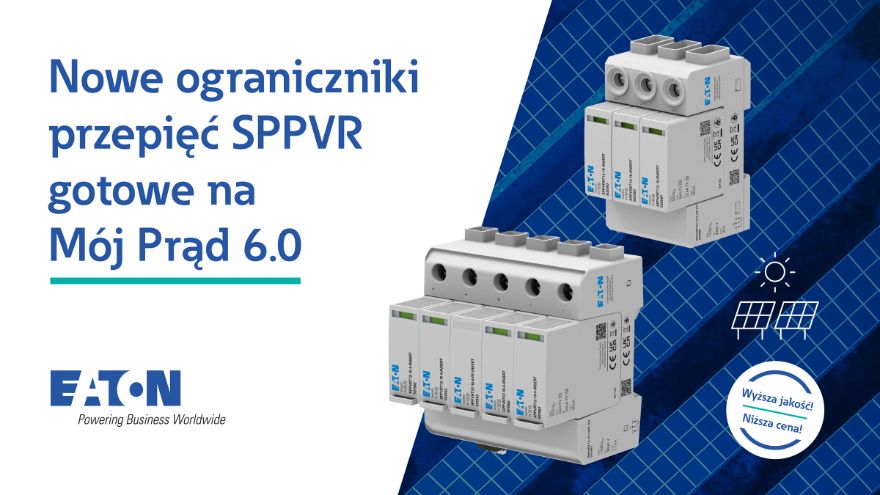
Check out EATON surge arresters at the Onninen wholesaler
Why is it worth investing in photovoltaics?
 It is worth considering investing in photovoltaic installations, especially in the context of the upcoming edition 6.0 of the " Mój Prąd " program, which starts on September 2, 2024. The program introduces new rules for co-financing for prosumers, offering support of up to PLN 28,000 for photovoltaic micro-installations, electricity storage and heat storage. The total budget of the program is PLN 400 million, and the funds come from European funds under the FEnIKS program. This is another step towards decarbonization and promotion of prosumer energy in Poland, aimed at supporting citizens in using renewable energy sources, which will contribute to reducing electricity bills and developing technology in the Polish energy sector.
The subsidy covers a wide range of devices, including roof coverings with a photovoltaic function, canopies and balcony sets. Energy storage facilities can receive support of up to PLN 16,000, with the minimum capacity of the electricity storage facility being 2 kWh.
The new edition introduces a mandatory net-billing system, which will replace the current net-metering system. Only people who settle their accounts in accordance with the new rules will be eligible for funding. In the five previous editions of the "Mój Prąd" program, the total amount of support amounted to PLN 2.96 billion, which enabled assistance to over 526 thousand prosumers.
Applications for funding will be accepted until 20 December 2024 or until funds are exhausted. The key requirement will be the installation of an energy storage for photovoltaic micro-installations reported for connection to the grid after 1 August 2024. The funding can cover up to 50% of eligible investment costs, which means that the maximum support for micro-installations without additional investments will be PLN 6,000, and for installations with an energy storage - PLN 7,000.
How to protect your photovoltaic installation?
 Buildings with photovoltaic panels installed on their roofs require special protection measures. These panels are particularly susceptible to surges, which is why it is necessary to use dedicated surge protection, operating with DC voltage. Its purpose is to limit the voltage to prevent damage to the photovoltaic panels, cables and inverter. This applies to all types of buildings - from installations in single-family houses to hospitals, public infrastructure, as well as commercial and industrial buildings such as hotels, banks, shops and factories.
According to the PN-EN 61643-31 standard, surge protectors should be installed in places exposed to surges, especially at the direct current (DC) input to the inverter, but it is also recommended to install them at the inverter output on the AC side. Additional surge protectors are recommended in the DC circuit, in cases where the inverter is located far from the panels (more than 10 meters of running cables), e.g. at the main switchboard. Securing the cables is just as important as providing protection for the inverter itself.
What causes voltage surges?
One of the main and most dangerous causes of overvoltages in electrical installations is the direct impact of lightning. More than 4 million lightning discharges occur every day worldwide. It is estimated that about 10% of them are discharges to the ground with surge currents, during which the current intensity can reach up to 200 thousand amperes. The energy generated in this way can penetrate the installation through lightning striking the low-voltage overhead power line, lightning protection system or other external systems conducting current, such as security, lighting or air conditioning systems. Inadequately secured television and other antennas mounted on the highest points of buildings also increase the risk of such phenomena.
The installation may also be exposed to the indirect impact of lightning current when the strike occurs within 2 km of low-voltage power lines. A discharge near the installation, e.g. in a tree growing next to a building, also poses a threat to the installation due to the possibility of voltage induced. These overvoltages may also be caused by switching operations inside some machines, such as welding equipment, induction furnaces, motors or pumps, as well as sensitive electronic devices in household appliances.
However, disturbances can also come from inside the building. Switching on and off various devices, systems or electrical tools, such as vacuum cleaners or pumps, can cause surges. Switching transformers, circuit breakers and inductive loads can also contribute to their occurrence.
Types of surge arresters
As in traditional electrical installations, photovoltaic power plants are protected against overvoltages using surge arresters. There are different types of surge arresters for photovoltaic systems, which differ in test class depending on their design and application. The most common are:
- Class I, type T1 arresters: Used where there is a high risk of direct lightning strike.
- Class II, type T2 arresters: They protect against indirect and induced overvoltages, offering greater immunity, which is important in the case of installations exposed to various disturbances.
- Class III, type T3 arresters: Provide additional protection and are mounted close to the devices they are intended to protect.
Eaton surge arresters
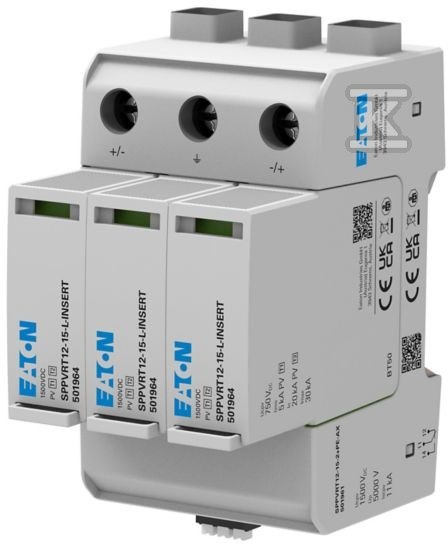
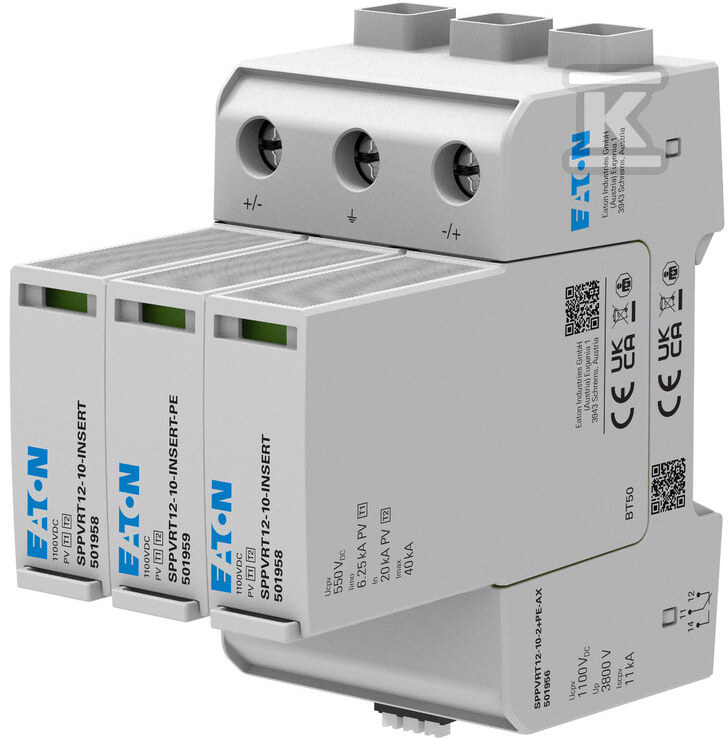
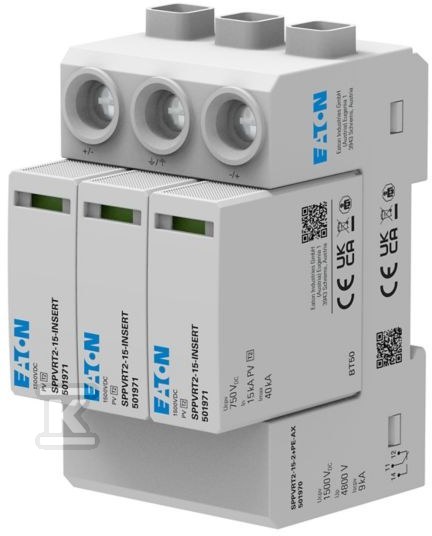
Eaton offers a full range of surge arresters for photovoltaic systems under the name SPPVR. EATON surge arresters are available in classes I+II or II and can be used in installations with a rated voltage of 600VDC, 1000VDC or 1500VDC. The SPPVR series includes the SPPVRT12-10-4+PE+AX model, which protects two PV strings in one device. An important feature of Eaton surge arresters is their flexibility - they have replaceable modules and optical signaling of the cartridge failure. Thanks to the replaceable modules, a damaged cartridge can be replaced without having to buy a new device, and the optical signaling allows for quick verification of the protection status after a surge.
Eaton also offers AC surge arresters that can be used at the inverter output to protect it on the AC side. A popular choice is the SPCT2-280/4 series Class II, Type T2 surge arresters, designed for three-phase TN-S systems. Another common solution is the SPBT12-280/4 series Class I+II, Type T1+T2 surge arresters, also for TN-S systems.
Bartholomew Jaworski
Senior Product Manager