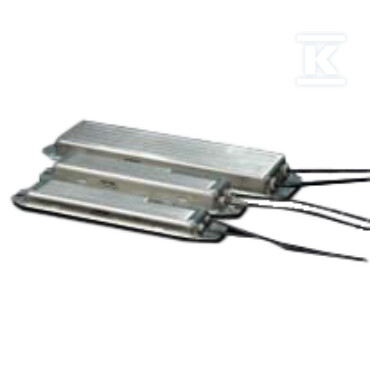
Resistors, dedicated for use with MCRA frequency inverters 100W 1.2K OHM MCRA 100W 1.2K OHM
Suggested products
TECHNICAL DATA
Sales unit dimensions and weight: 1 pcs
Resistors, dedicated for use with MCRA frequency inverters 100W 1.2K OHM MCRA 100W 1.2K OHM
Braking resistor MCRA 100W 1.2kΩ is a key component in regenerative braking systems, designed to work with frequency inverters. Its function is to dissipate excess energy generated during motor braking, converting it into heat and preventing damage to the inverter. This is particularly important in applications where the motor frequently operates in braking mode, such as in cranes, elevators, or portal drive systems.
This specific model, with a power of 100W and a resistance of 1.2kΩ, is optimally matched to inverters with a power of 0.4kW. Using a braking resistor allows for smooth and controlled motor stopping, while simultaneously protecting the drive system components from overloads and failures. The resistor's design ensures safe heat dissipation, and the robust housing guarantees durability and resistance to mechanical damage.
Key features and application:
- Application: Resistor dedicated to LS Electric inverters, but compatible with most standard frequency inverters.
- Power: 100W – provides effective energy dissipation in typical regenerative braking applications for 0.4kW motors.
- Resistance: 1.2kΩ – a value matched to work with inverters, enabling optimal voltage suppression during braking.
- Dimensions: Compact dimensions (150 x 35 x 19 mm) make it easy to mount even in limited spaces.
- Application: Ideal for systems requiring precise braking control, such as cranes, elevators, conveyor belts, and industrial machines.
- Construction: Made of high-quality materials ensuring durability and reliable operation even in harsh industrial conditions. The metal housing protects against mechanical damage and external factors.
Braking resistors are essential wherever effective and safe stopping of an electric motor controlled by an inverter is required. By converting kinetic energy into heat, the resistor prevents exceeding the permissible voltage values in the inverter's DC link, protecting it from damage and ensuring continuous system operation. Selecting the appropriate braking resistor is crucial for the correct functioning of the drive system and extending its service life.