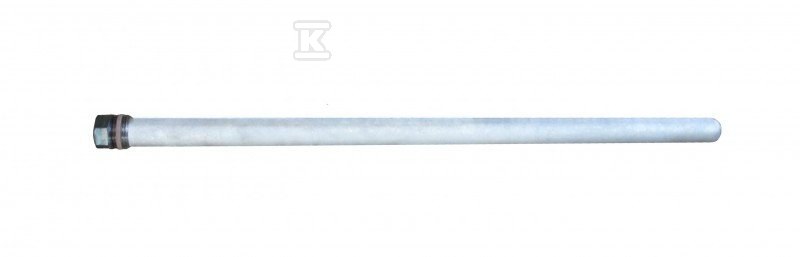
Magnesium anode 21x435 3/4" 22172

Suggested products
TECHNICAL DATA
Sales unit dimensions and weight: 1 pcs
Magnesium anode 21x435 3/4" 22172
Corrosion protection for tanks – magnesium anodes
Magnesium anodes are a key element in protecting enameled tanks from corrosion. Made of a special magnesium alloy, they operate on the principle of cathodic protection. In practice, this means that the anode "sacrifices" itself, corroding instead of the tank steel. This ensures that even minor damage to the enamel coating does not lead to rust development and extends the life of the device. The magnesium anode generates a protective current that neutralizes corrosion processes in the event of enamel defects.
This model of anode, with dimensions of 21x435 mm and a ¾” thread, is designed for use in a wide range of water heaters and tanks. Its rod construction provides a large active surface area, and therefore – longer life and efficiency. The net weight of the anode is 0.36 kg.
How does cathodic protection work?
The principle of operation is simple: the difference in electrochemical potentials between the tank material (steel) and the magnesium anode causes the magnesium to corrode, protecting the steel from destruction. The anode acts as a kind of "sacrificial element" that absorbs the aggressive effects of the environment. This protects the internal coating of the tank from micro-defects resulting from oxidation. Replacing the anode is necessary as it wears out – this process is natural and results from its protective action.
Installation and compatibility
The ¾” threaded anode is easy to install and remove, making regular replacement easier. It is compatible with many models of OW-E 120.1+ water heaters, manufacturer's models and W-E 100.24 PLUS (a full list of compatible models is available in the table on the manufacturer's website). It is important to remember the electrical connection of the anode to the tank steel – this is crucial for the correct operation of the cathodic protection system. For installers, this means checking electrical connections during installation and regular checks of the anode condition during service inspections.
CERTIFICATES, APPROVALS, SAFETY, COMPLIANCE AND WARNINGS
Information about websites
Attachments