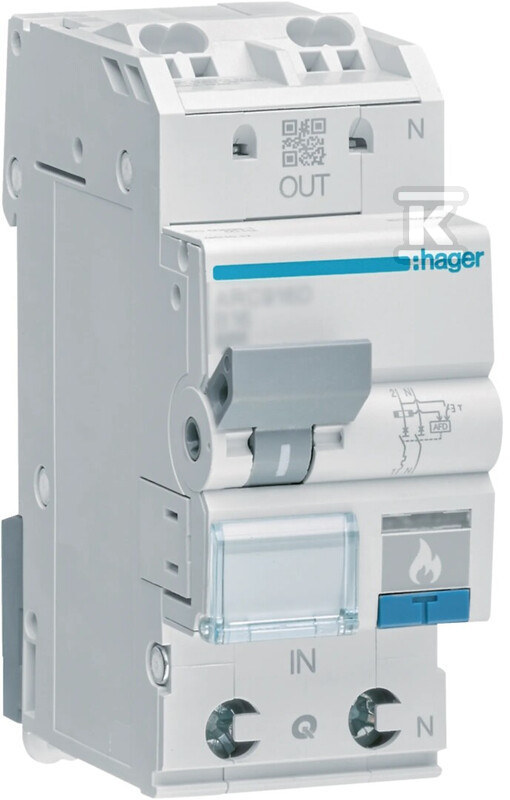
Arc fault detection device with overcurrent protection 1P+N 6kA B 10A ARC910D

Suggested products
TECHNICAL DATA
Sales unit dimensions and weight: 1 pcs
Arc fault detection device with overcurrent protection 1P+N 6kA B 10A ARC910D
Arc Fault Detector – Protection of Installations and Devices
This arc fault detector with an overcurrent member is a key element in protecting electrical installations from the effects of electric arcs. The device combines the functions of an overcurrent circuit breaker and an arc fault detector, providing comprehensive protection. This is particularly important in residential, commercial and public buildings, where the risk of fire due to electric arcs is real.
The detector is designed for mounting in electrical distribution boards and works with installations with a voltage of 230V and a frequency of 50Hz. Its compact size (2 module width) allows for easy adaptation to existing distribution boards. The use of characteristic B ensures a quick response to overloads and short circuits, while allowing for trouble-free starting of devices with electric motors, which generate momentary current surges.
Functionality and safety
The device has a rated short-circuit breaking capacity of 6kA, which guarantees effective disconnection of the circuit in the event of a serious failure. In addition, the presence of an arc fault detection device (AFDD) allows for the detection and disconnection of the circuit in the event of a dangerous electric arc, which can be the cause of a fire. At the same time, a disconnectable N pole increases safety by disconnecting both the phase and neutral in the event of a hazard.
The device design meets the requirements of EN 60898 and IEC 60947-2 standards, confirming its compliance with applicable safety standards. The degree of protection IP20 provides protection against accidental contact, but does not protect against the effects of water or dust - therefore, the device should be mounted in dry and closed rooms. Energy limitation class 3 and surge category 3 indicate its resistance to disturbances in the electrical network.