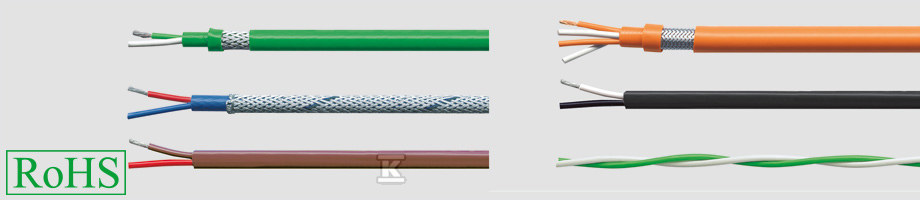
Compensation cable type K AN 15 L 2x1.5 mm² 48064

Suggested products
TECHNICAL DATA
Sales unit dimensions and weight: 1 m
Compensation cable type K AN 15 L 2x1.5 mm² 48064
Compensating leads – precision temperature measurement
The AN 15 L 2x1.5 compensating lead is a key element in measurement systems, ensuring accurate temperature readings. It serves as an extension of the thermocouple to the measuring device, minimizing errors resulting from thermoelectric potential differences. The lead's construction, with strands made of special alloys (Fe/Cu-Ni, Ni/Cr-Ni or Pt-Rh/Pt) and various insulations (PVC, silicone, Teflon or fiberglass), allows it to be adapted to specific applications and working conditions.
Construction and properties
The AN 15 L 2x1.5 lead is characterized by a solid construction. The strands are made of stranded or solid wire, which affects flexibility and ease of installation. Insulation available in various materials allows operation in a wide temperature range – from -25°C to +180°C (continuous operation) and briefly up to +200°C at the measuring head. Thanks to the shielding (optionally available in a version with steel or copper braiding), the lead is resistant to electromagnetic interference. The strand-to-strand test voltage is 500V, ensuring safe use. The resistance of the leads has been determined in accordance with DIN 43713 and depends on the strand material: Fe: 0.080 Ω/m, CuNi: 0.327 Ω/m, NiCr: 0.07 Ω/m, Ni: 0.3 Ω/m, PtRh: 0.023 Ω/m and Pt: 0.041 Ω/m. The operating capacitance for a PVC-insulated strand is approximately 135-240 nF/km (depending on the version with or without shielding).
Applications and benefits
Compensating leads are widely used in industry, laboratories and anywhere precise temperature measurements are required. They are indispensable in systems for regulating and controlling technological processes. Using the appropriate compensating lead guarantees the reliability of measurement data and optimal system performance. The availability of different insulation materials allows the lead to be adapted to specific environmental conditions – from standard industrial applications to demanding chemical or high-temperature environments. Additionally, the lead meets IEC 60332-1-2 standard regarding fire behavior.